Choosing the Appropriate Chopping Board

Choosing a cutting board can be a challenging and time-consuming endeavor. It is difficult to decide which option to go with. However, if you are aware of the characteristics that are most essential to you, you will be able to make a decision that is tailored to your requirements.

Glass boards have a stunning appearance and are unquestionably long-lasting. They are simple to clean and provide an excellent method for shielding your countertops from the heat of pots and pans. On the other hand, cutting on a glass board might be difficult since it can leave pits and grooves in your blades, making it more difficult for you to cut on them.
If you are shopping for a cutting board on a limited budget, you might want to consider purchasing one made of plastic. They are available in a range of thicknesses, degrees of brittleness, and colors. Flexible cutting boards are not only convenient to store but also work very well when moving food from one location to another. Hard boards provide stability and strength, as well as something to absorb heat from hot pots and pans. [Case in point:] [C]ooks often use hard boards. These cutting boards are simple to disinfect and, if they are of a suitable size, can even be placed in the dishwasher for speedy and thorough cleaning.

Many people who are just beginning their culinary adventures prefer to cut their food on wooden cutting boards. On the other hand, these boards are susceptible to gouges and cuts, both of which can serve as breeding grounds for bacteria. Because they can become a breeding ground for bacteria if they are not properly cared for and cleaned, it is essential to have a good understanding of how to clean them effectively.

It is crucial to know how to keep the food in your kitchen safe, regardless of the board that you choose to use. If you want the greatest results, you should have many boards that are color coded for each different kind of food. For example, you should have one board for fresh produce such as fruits and vegetables, another board for meat, fish, and poultry, and a third board for dairy products or cooked dishes. Because of this, there will be no risk of cross contamination of any of your foods, which will keep your health intact.

To sanitize your plastic boards, some people will recommend that you use bleach water that has been diluted. If you want to clean your board yourself, you can put one tablespoon of unscented chlorine bleach into one gallon of water, let it sit for up to half an hour, and then rinse it off. After that, wash it with clean water and allow it to dry naturally. Do not give in to the need to make use of a dish towel.
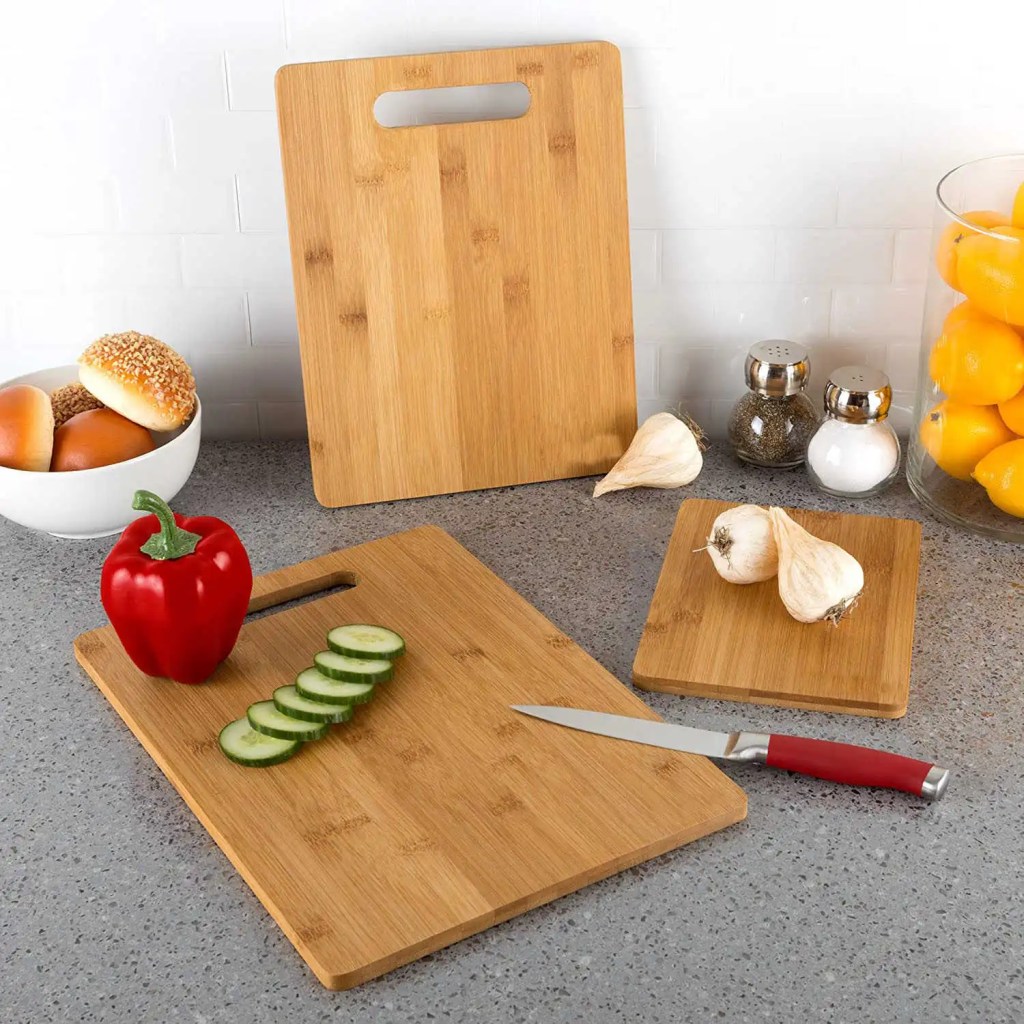
How to Properly Clean and Maintain Wooden Cutting Boards

The majority of people do not view wooden cutting boards as products that need to be maintained in any way. They are used, then cleaned, and finally put away, just like the other items in the kitchen. On the other hand, the vast majority of us want our boards to maintain their cleanliness and to be used for the longest time feasible. A couple of additional steps are required in order to accomplish this goal. This article will guide you about cleaning bamboo cutting board.

As soon as you remove your cutting boards from their packaging for the first time, you should brush them with mineral oil to prevent the boards from splitting. The question “How much Mineral Oil should I use?” is asked by a lot of individuals. Coating the board and allowing it to soak in for 15–20 minutes afterward is an excellent approach to find out whether or not this is the case. Give it another coat if it soaks in and the surface feels dry to the touch after the first one. Repeat this technique until the mineral oil pools on the surface, and then use several paper towels to remove the excess mineral oil. When you use this method, you can be certain that you are providing the appropriate maintenance for your wood items.

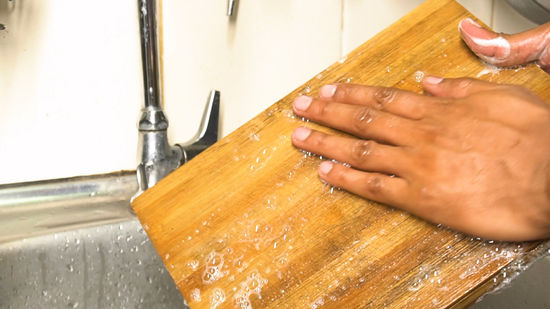
After use, clean your wooden cutting boards the same way you clean the other utensils in your kitchen by washing them with soap and water and then drying them right away. It is important not to let them soak in water because doing so can cause water damage to the item. Additionally, you should never place wooden cutting boards in the dishwasher because doing so might cause heat damage to the boards. You may wish to rub with mineral oil anywhere from two to three times each month depending on how often you use it.

There have been a lot of research conducted in the realm of science that have demonstrated that wooden boards contain antibacterial qualities, which makes them the superior option to plastic boards in this context. After cleaning the wood, rub a half of a lemon over it to kill any bacteria that could still be there. This is an extra precaution you can take.

What should you do if your cutting board has an odor (for example, after chopping garlic) or a stain (for example, after chopping strawberries)? Simply slicing a lemon in half and rubbing it all over the surface of the board can remove any odors or stains that could be on it. The lemon will clean and brighten the board as it is used.

It is not a good idea to keep wooden cooking utensils in places that become extremely hot or cold or have a lot of moisture in the air. They become warped and cracked as a result of these conditions. Instead, you should put them away in a dry location.

Does that sound like a lot of effort to you? However, this is not the case. If you follow some straightforward advice, you may extend the life of your wooden cutting boards and ensure that your family continues to enjoy good health. That justifies the effort.

Design a site like this with WordPress.com
Get started